I have mentioned the St. Johns Bridge in two of my stories about growing up in the St. Johns neighborhood. I didn’t think much about it then, even though I walked across it and later drove across it many times. Seeing Debi Kopczak Dorman’s recent Facebook profile photo of the Bridge refreshed my fond memories of crossing it.
It is a very iconic structure in North Portland located in what I learned for the first time today on Wikipedia was named the Cathedral Park Neighborhood after the Gothic shape of the two towers on the bridge. Even though I lived there for the entire time I was in Portland, I had never heard of the neighborhood being referred to as Cathedral Park. The bridge connects the St. Johns business district on one end with the Linton community on the other. As I mentioned in my other stories, the south end leads to Forest Park where my friends and I had many adventures.
The bridge was proposed as a ferry replacement in the mid 1920s and finally financed by a bond measure in November of 1928. The construction was started one month before the stock market crash in 1929. It was completed in 1931 more than a year faster than estimated, and $1,000,000 under budget.
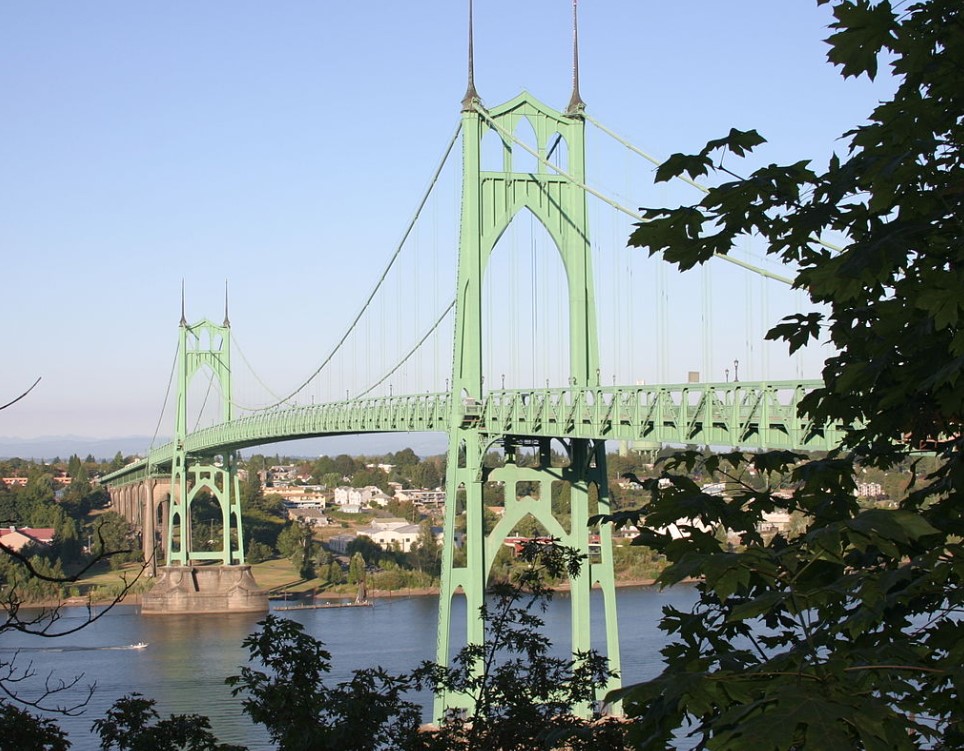
It was designed by David B. Steinman as a suspension bridge because it would cost less to build. The estimated cost was $3,100.000.
It is 2,067 feet long, 400 feet high, and the road bed is 200 feet above the Willamette River. The longest span is 1,207 feet long. It was dedicated on June, 13, 1931 as the centerpiece of the 23rd Rose Festival. At that time, it was the longest suspension bridge west of the Mississippi River and the tallest in this country.
I remember as a kid walking across it was somewhat thrilling. In the middle of the long span, it would shake and bounce noticeably when vehicles passed by, especially large trucks. That and the view down from the middle was a little unnerving.
Judging from the amount of traffic it carries today, the expense of construction and maintenance has been well worth it. You can read more about it online or in books and articles about Portland, Oregon’s history.
Ken Kaiyala
2-23-2024
 Kenkaiyala.com
Leave a comment